
Aug 18, 2025
Cleanrooms for Biologics Manufacturing
The Critical Role of Cleanrooms in Biologics Manufacturing
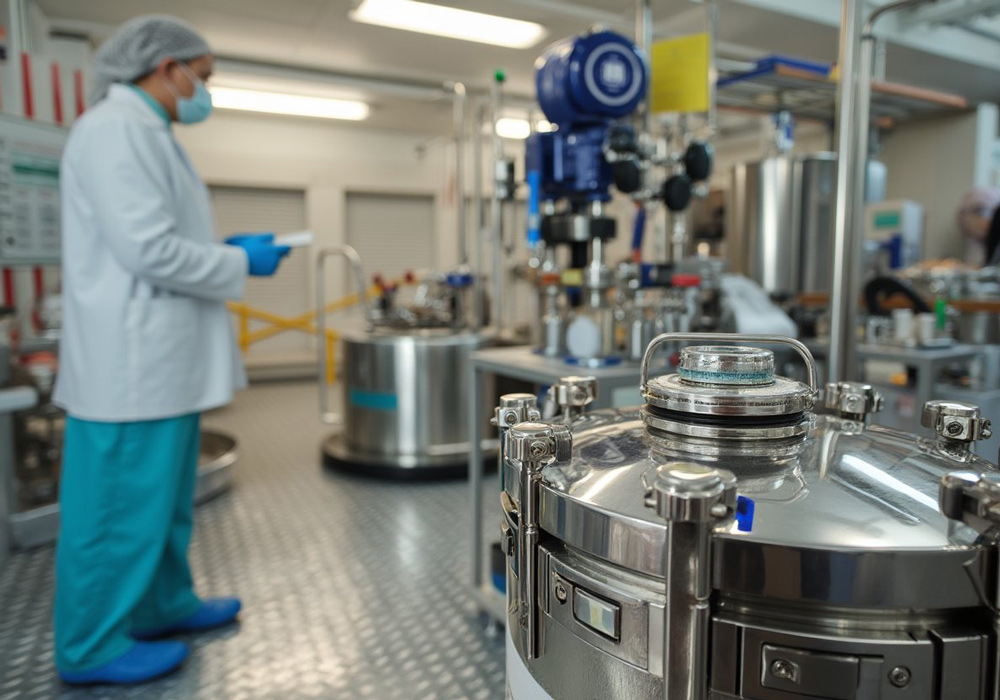
Biologics—including vaccines, monoclonal antibodies, and cell and gene therapies—represent some of the most innovative and sensitive products in modern medicine. Unlike traditional small-molecule drugs, biologics are derived from living systems, making them more vulnerable to contamination and environmental variation during production.
To ensure product safety, efficacy, and regulatory compliance, biologics manufacturing must occur in rigorously controlled environments. Cleanrooms provide the necessary foundation for sterility, particulate control, and validated production conditions. Regulatory agencies such as the FDA, EMA, and WHO enforce strict cleanroom requirements under Good Manufacturing Practice (GMP) guidelines, further raising the bar for facility design and operation.
Key Cleanroom Requirements for Biologics Manufacturing
Cleanrooms for biologics must meet both ISO 14644 classifications and GMP grades that align with specific manufacturing activities. ISO 14644 standards define cleanroom classes by airborne particle counts, while GMP designations (Grade A–D) focus on microbiological control.
- Grade A: Highest level of cleanliness, required for aseptic filling zones and critical operations.
- Grade B: Background environment for Grade A activities.
- Grades C and D: Support areas for less critical processes, including formulation and component preparation.
Throughout both upstream (cell culture, fermentation) and downstream (filtration, purification, filling) processes, aseptic conditions are essential. Cleanrooms must maintain proper zoning, airflow, and contamination control to preserve biologic product integrity.
Contamination Risks in Biologics Production
Due to the complexity and sensitivity of biologics, contamination risks are significantly heightened. These risks include:
- Microbial contamination: Bacteria, fungi, or viruses can compromise cell cultures and render batches unusable.
- Particulate contamination: Airborne particles may carry microbes or disrupt sterility.
- Cross-contamination: Residual materials or equipment from previous batches pose risks to product purity.
Contamination can originate from raw materials, equipment surfaces, HVAC systems, or human personnel. A robust cleanroom design mitigates these threats by maintaining strict environmental controls, enforcing gowning procedures, and leveraging HEPA filtration and pressure differentials to isolate critical zones.
Cleanroom Design Considerations for Biologics
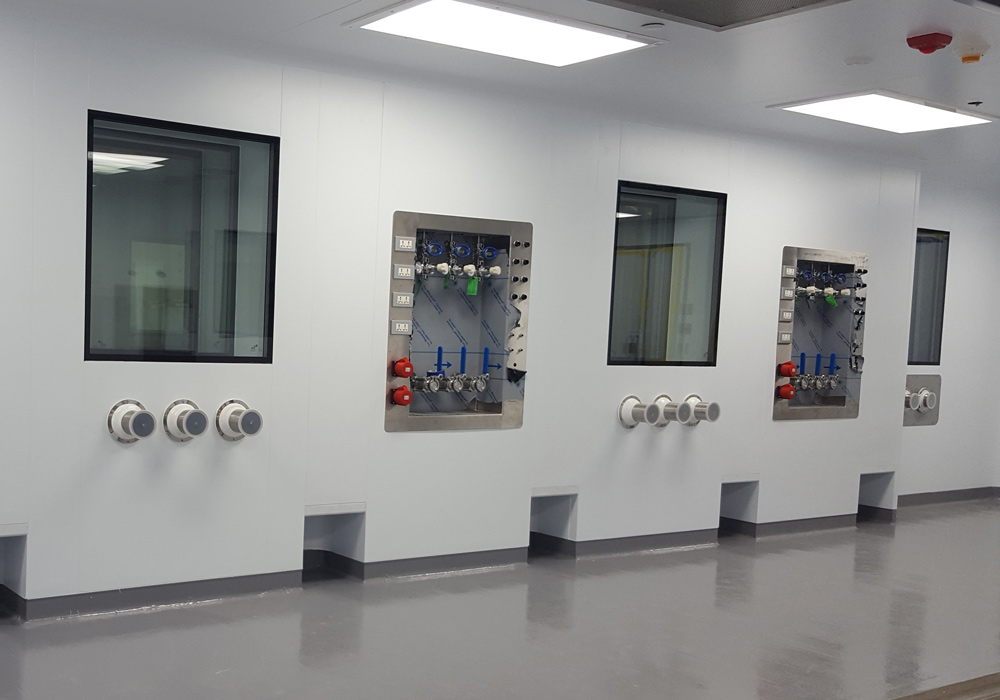
The architectural layout of a biologics cleanroom plays a vital role in contamination control. Design strategies include:
- Zoning and segregation: Clean and dirty areas must be physically separated to prevent cross-contamination.
- Unidirectional flow: Personnel and materials should move in one direction, from clean to less clean zones.
- Support infrastructure: Airlocks, gowning rooms, and pass-through chambers help maintain pressure gradients and prevent airborne migration of contaminants.
The cleanroom must also support process-based requirements for specific biologics, such as large bioreactors, isolators for sterile filling, and space for environmental monitoring systems.
Air Filtration and Environmental Control
Biologics cleanrooms rely on high-efficiency filtration and precise environmental control to protect product sterility and process consistency:
- HEPA/ULPA filtration: Removes ≥99.97% of particles ≥0.3 µm, ensuring clean air supply.
- Positive pressure differentials: Prevent ingress of contaminants into cleaner zones.
- Environmental monitoring: Continuous measurement of temperature, humidity, and airborne particulates helps maintain ISO and GMP compliance.
These systems must function consistently to meet regulatory requirements and prevent variability that could affect product quality.
GMP and Regulatory Compliance
Cleanroom facilities are central to demonstrating compliance with key biologics manufacturing regulations, including:
- FDA 21 CFR Part 210/211: Governs drug manufacturing practices in the U.S.
- EU GMP Annex 1: Specifies sterile production requirements in the EU.
- Global GMP standards: Adopted by agencies in Asia, Canada, and Latin America.
Cleanrooms enable the physical environment for consistent GMP adherence. Validated equipment, SOPs, and monitoring systems are essential for quality assurance. Regulatory bodies expect comprehensive documentation of cleanroom design, operation, and performance through qualification and validation protocols.
Prefabricated Cleanrooms for Biologics
Prefabricated cleanroom systems offer a compelling alternative to traditional construction for biologics manufacturing. These modular units are built offsite under controlled conditions and shipped to the final site as fully integrated environments.
Benefits include:
- Speed: Shorter design-build timelines accelerate facility readiness.
- Repeatability: Standardized modules reduce variability and ease qualification.
- Scalability: Facilities can be expanded or modified with minimal disruption.
G-CON’s prefabricated POD® Cleanrooms are a leading solution for biologics manufacturers seeking agile, compliant, and rapidly deployable cleanroom infrastructure. These units are designed to meet GMP and ISO standards and can be validated through Factory and Site Acceptance Testing (FAT/SAT) for faster startup.
Scalability and Flexibility for Multi-Product Facilities
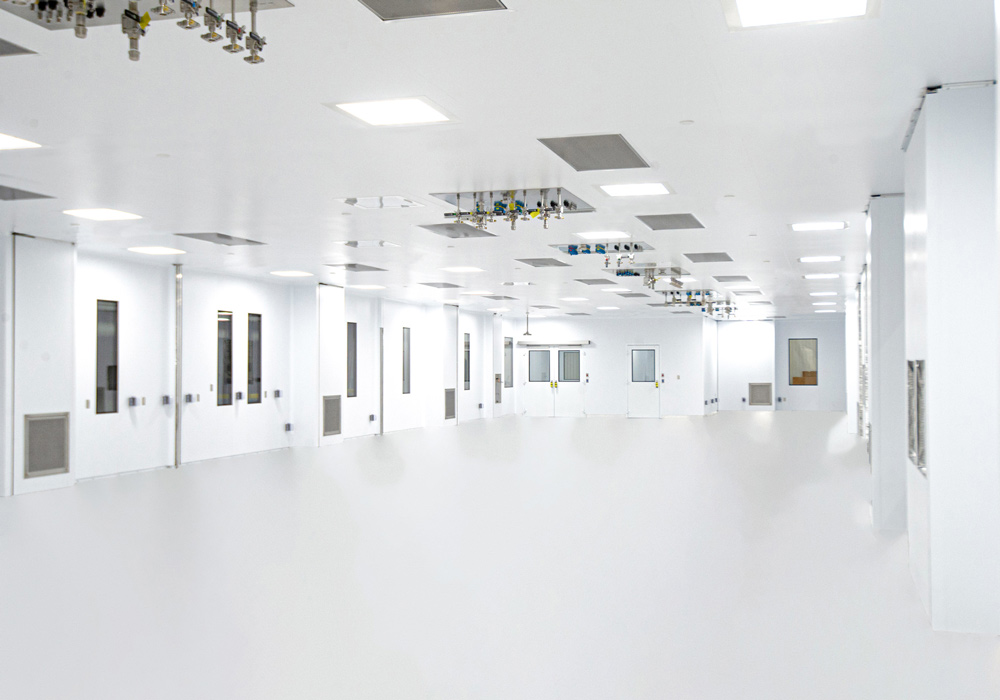
Biologics manufacturers often need to accommodate evolving product pipelines and batch sizes. Flexible cleanroom design is essential for:
- Multi-product operations: Supporting different therapies in the same facility.
- Tech transfer: Moving from clinical-scale R&D to commercial production.
- Facility expansion: Adding capacity without disrupting existing operations.
Prefabricated cleanrooms offer plug-and-play scalability that outpaces traditional stick-built methods. Whether supporting monoclonal antibodies or gene therapy vectors, modular cleanroom units can be adapted to meet changing regulatory and capacity demands.
Quality Assurance and Validation
A robust validation strategy underpins cleanroom compliance. Key qualification phases include:
- Installation Qualification (IQ): Verifies cleanroom components are installed correctly.
- Operational Qualification (OQ): Confirms systems perform within specified limits.
- Performance Qualification (PQ): Demonstrates cleanroom supports GMP manufacturing processes.
Continuous monitoring of viable and non-viable particles ensures the environment remains within regulatory parameters. G-CON’s prefabricated POD® Cleanrooms support streamlined validation with documented performance data from factory acceptance and built-in monitoring systems.
Cost and Timeline Advantages
Time-to-market and cost-efficiency are critical for biologics manufacturers. Traditional stick-built cleanrooms often require 15–30 months for design, permitting, construction, and commissioning. In contrast, prefabricated cleanrooms can be deployed in 9–18 months, accelerating product launch timelines.
Additional cost advantages of prefabricated cleanrooms include:
- Reduced construction delays
- Lower labor and installation costs
- Energy-efficient HVAC and LED lighting systems
- Minimal downtime for future modifications
The total cost of ownership is often lower with prefabricated systems due to repeatability, energy savings, and reduced risk of compliance failures.
Future Trends in Biologics Cleanrooms
Cleanroom technology is evolving to meet the demands of next-generation biologics. Key trends include:
- Automation and robotics: Reduce human contamination risks and increase efficiency.
- Isolator technology: Enhances aseptic processing and operator safety.
- Smart monitoring systems: Use AI and IoT sensors to detect anomalies in real time.
- Personalized medicine: Requires smaller, decentralized cleanroom footprints.
Prefabricated cleanrooms align with these trends by offering flexible, tech-enabled spaces that can evolve with therapeutic advancements and regulatory expectations.
Building for Regulatory Success and Product Integrity
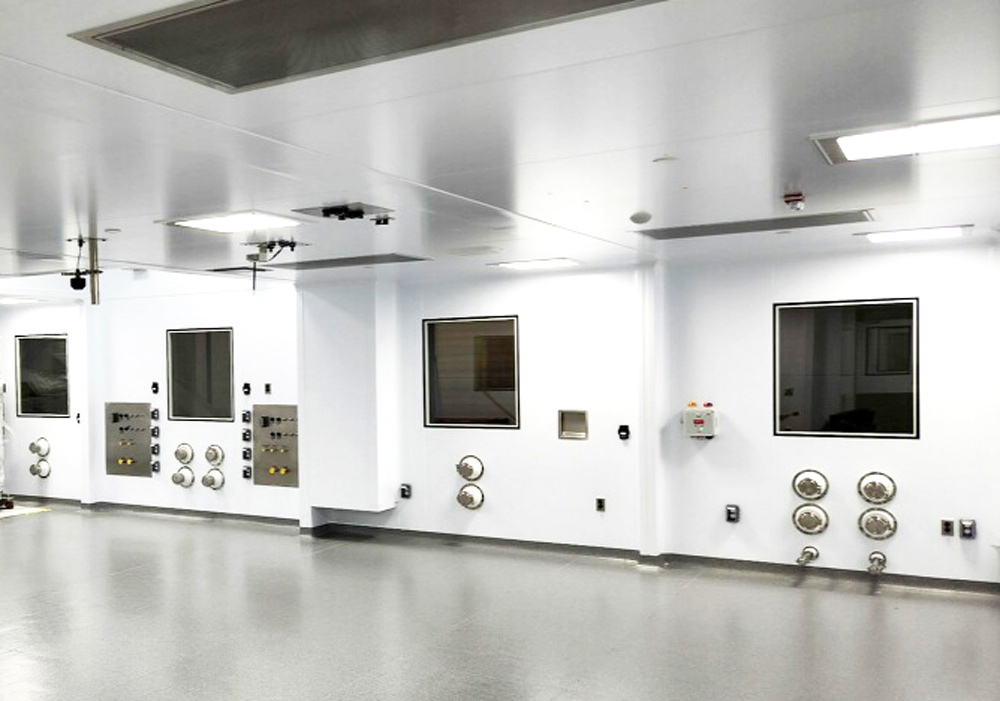
Biologics manufacturing demands an uncompromising commitment to contamination control, regulatory compliance, and production reliability. Cleanrooms form the physical and operational foundation of this success.
Prefabricated cleanrooms offer a future-forward approach—accelerating timelines, reducing risk, and enabling agility in a competitive and fast-moving sector. For biologics developers seeking to scale with confidence and speed, G-CON’s prefabricated POD® Cleanrooms provide an ideal cleanroom solution.
Partner with G-CON to plan, design, and deploy a cleanroom that supports regulatory success and biologics manufacturing excellence.
FAQ
What ISO class is required for biologics manufacturing?
ISO Class 5 is typically required for aseptic operations such as filling, while ISO Class 7 or 8 may be used in support areas.
How do GMP standards apply to biologics cleanrooms?
GMP guidelines define the environmental and operational controls needed to maintain product quality, including cleanliness levels, air handling, and monitoring procedures.
Can prefabricated cleanrooms meet biologics manufacturing requirements?
Yes. G-CON’s prefabricated cleanrooms are engineered to meet FDA, EMA, and global GMP standards with validated design and performance.
What are the biggest contamination risks in biologics production?
Microbial contamination, particulates, and cross-contamination from raw materials or personnel are primary risks mitigated by cleanroom environments.
How long does it take to install a biologics cleanroom?
Traditional cleanrooms can take 15–30 months; prefabricated cleanrooms can be installed in as little as 9–18 months, depending on scope.
